
Here is the article:
Ethereum: Can a non-Segwit miner mine Segwit transactions?
The underlying architecture of the Ethereum network has undergone significant changes over time. One of the most notable updates was the move from SegWit (Segregated Witness) to the more efficient and secure Bech32 addresses. The change was intended to improve scalability and reduce the amount of memory required for transactions.
However, this update also introduced a new layer of complexity, especially for miners unfamiliar with the updated syntax. One question that arises is whether non-Segwit nodes can mine Segwit transactions.
To understand why non-Segwit miners cannot mine Segwit transactions directly, let’s look at how these transactions work.
What is Anyone Can Spend (ACSP)?
Anyone-Can-Send is a feature introduced in Ethereum 2.0 as part of the sharded stack architecture. It allows users to spend money on any transaction without revealing their identity. This means that anyone can spend their funds on a given outcome, regardless of whether they are the sender or the recipient.
Segwit Transactions: Anyone Can Spend (ACSP) and Not SEGWIT Miners
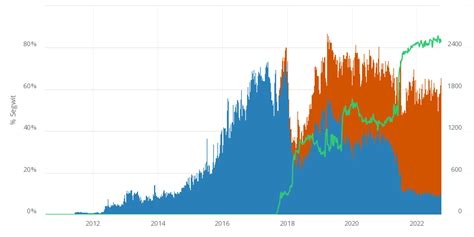
When a user wants to spend money on any transaction using ACSP, the transaction is wrapped in a SegWit block. A SegWit block contains input and output transactions, as well as the user’s account balance.
To mine wrapped transactions, non-Segwit miners need to be aware of the updated syntax for Segwit transactions. In particular, they need to understand how to interpret Segwit transactions (txs) that spend Segwit outputs.
Can non-SEGWIT miners mine ACSP Segwit transactions?
When a legacy miner receives a transaction wrapped with ACSP and it includes spending Segwit outputs, the miner cannot mine that transaction directly. This is because non-SegWit miners do not have the information needed to spend money on these transactions.
However, there are ways for non-Segwit miners to validate and process ACSP Segwit transactions. One possible approach is to use a library or tool that provides the functionality needed to decode and verify the transaction.
Another option is to create a custom solution that allows non-Segwit miners to mine and validate ACSP Segwit transactions. This may involve modifying the Ethereum network protocol stack to accommodate these new features.
Conclusion
In summary, while non-Segwit miners cannot directly mine ACSP Segwit transactions without additional processing, there are ways to validate and process these transactions. As the Ethereum network continues to evolve, additional solutions will likely emerge to support these new features.
For now, non-Segwit miners should be aware of the updated syntax for ACSP Segwit transactions and consider exploring alternative options for validating and processing the new transaction type.