
cryptocurrency: a deep immersion in the test of the pole and in the test of the mechanisms of work consent
The world of cryptocurrencies has exploded in recent years, with thousands of new tokens and projects that emerge to satisfy the growing demand for safe and decentralized financial systems. At the center of this revolution is the consent mechanism, which determines how transactions are verified and added to a public master book. Two important consent mechanisms that have acquired significant attention are proof of participation (POS) and the test of work (POW). In this article, we will deepen the foundations of each mechanism, their advantages and disadvantages and explore the implications for the adoption of the cryptocurrency.
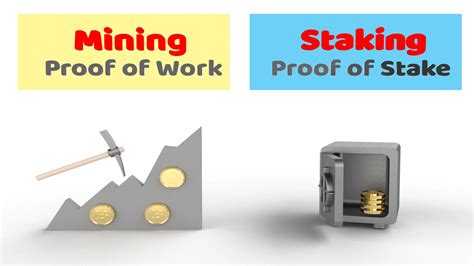
Palo test (POS)
The test of participation is a consent algorithm developed by Gavin Wood in 2014. It is designed to be efficient from an energy and scalable point of view, making it an interesting option for large -scale distributions such as the Ethereum network.
How Post works:
- Validation : a validator node verifies transactions on the blockchain.
2
3
- Check
: the selected validity checks transactions and adds them to the blockchain.
Advantages:
- Energy efficiency : POS requires less energy than the POW, making it a more respectful option of the environment for large -scale distributions.
2
- Increase in safety : the random selection process makes it more difficult for attackers to manipulate the blockchain.
Disadvantages:
- Centralized control : the shares of the validators are often controlled by a small group of large -scale investors, which can lead to centralization and reduced decentralization.
- Slow transaction times : the POS consent mechanisms tend to be slower than power, since validators must wait for the verification of their spicy coins.
Proof of Work (Pow)
The test of the work is another dominant consent algorithm developed by Nakamoto in 2008. It is widely used on Bitcoin and other cryptocurrencies such as Ethereum.
How Pow works:
- Mining : a validator node resolves complex mathematical puzzles, which validate transactions and create new blocks.
- Block reward : the winner of the puzzle is rewarded with a cryptocurrency just coined (reward of the block).
- Check : Validers check the transactions and add them to the blockchain.
Advantages:
- Energy efficiency : POW requires significant computational power, making it more efficient from an energy point of view compared to the POS for large -scale distributions.
2
- Increase in safety : the random selection process makes it more difficult for attackers to manipulate the blockchain.
Disadvantages:
- High consumption of energy : POW requires significant quantities of computational power, making it a less respectful option of the environment.
2
- Transaction commissions : transactions processing times are longer due to the times of creating the slower block.
comparison and implications
In summary, both the mechanisms of Pos and Pow consent have their strengths and weaknesses. While POS is more efficient from an energy and scalable point of view, it can be controlled by a small group of investors. Pow, on the other hand, requires significant computational power but is faster and efficient from an energy point of view.